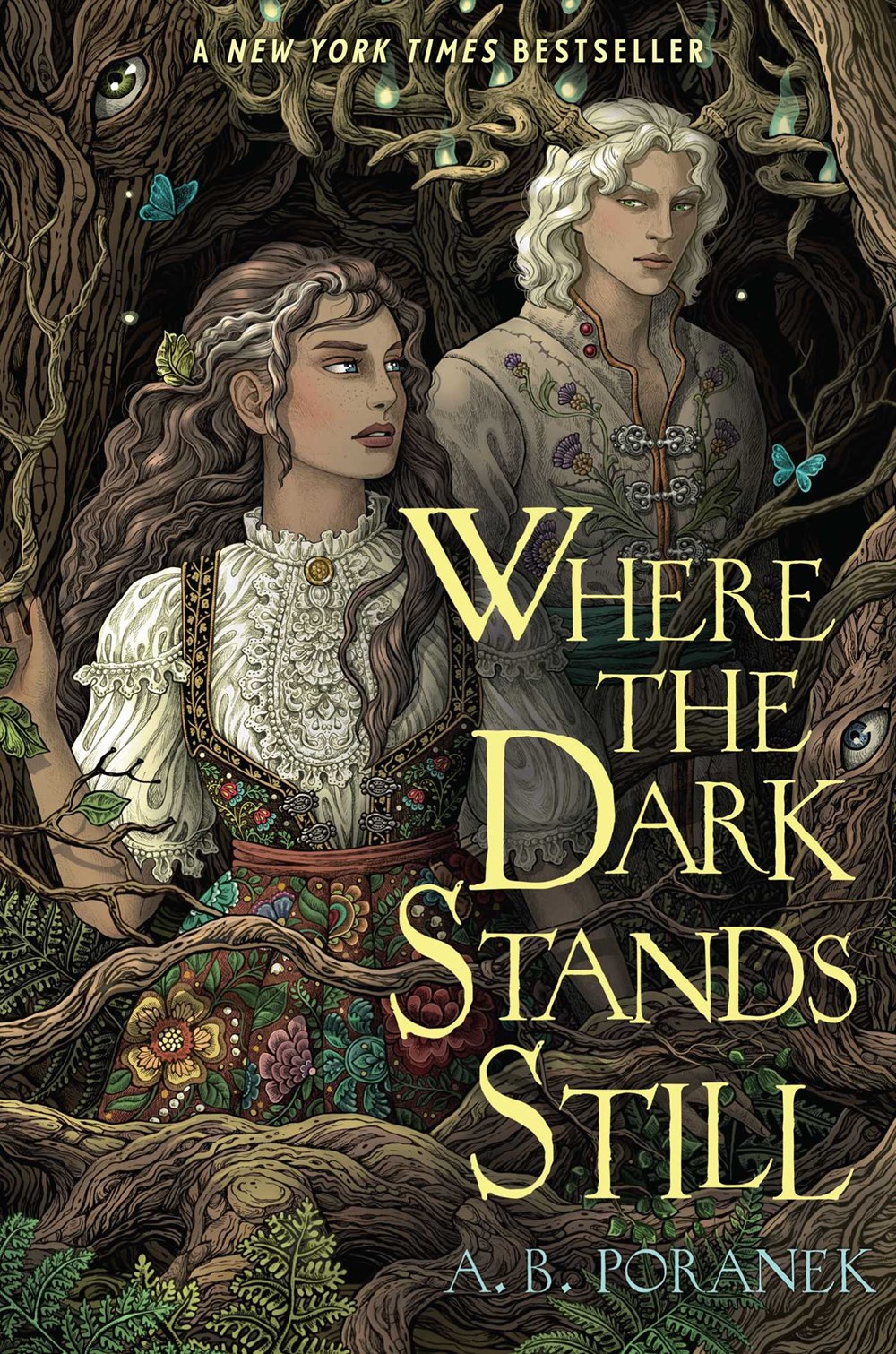
Some stories breathe through the world they unravel in. Where the Dark Stands Still is one such, meditating on the woods, its enormous trees, thick mist, and legends of residing demons. It doesn’t waste any time, pulling you into a spirit-wood on a moonlit night like stumbling into a rabbit hole, when admitting “the forest has a morbid sort of beauty: the beauty of flowers over tombs or the dive of a hawk catching prey.” As the description leaves an ominous imprint of death on the darkness of this forest, you’ll wonder why a girl treads deeper, leaving behind her village.
Liska has magic but the villagers whisper she’s a witch, as wicked as the dark magic harboured in the spirit-wood, and if the legends are true, she must walk into the forest on this night of solstice. For the fern flower will bloom there, and she’ll take it in her hands to make a wish: to atone for her sins. This is her only chance at redemption, so she continues, even when the spirit-wood smells “like a freshly dug grave.” She will do anything to prove that she is not dangerous, to prove she belongs in the village.

But just when she finds the flower, nestled in the fern, a white stag interrupts. Refusing to let her pick it, the stag rots into a half-man with ashen skin, white hair, and a name Liska knows, like everyone else: Leszy, the one who rules the spirit-wood—the demon warden. He offers a deal: serve me for a year, and when you are done, I will grant your wish. Liska assures herself a year is worth it if she could finally be free of her magic. Her mistakes from her uncontrolled power would finally fade.
So Liska moves to his enchanting but crumbling house and encounters disappearing and reappearing doors, magical creatures, and Leszy’s secretive lifestyle as the guardian of the woods. Even the spirit’s study is as atmospheric as the woods stretching outside. As much as Leszy had reasons to invite Liska into this deal, he does prove constructive to her as he encourages her to tame her powers instead of fearfully suppressing them.
This makes way for a religion vs magic conversation that fantasy can be a great outlet to explore through. A faith preaching on the evils of magic is well countered by the demon as he recalls “our gifts were revered, not reviled.” While Liska continues to understandably be sceptic of him and his magic: Liska was warned all her life: demons are agents of the devil, sent to sow chaos and tempt humans to sin. Magic is their element, and lies are their weapons. The author has mentioned her need to breathe Slavic mythology or Polish folklore and culture into this book, and everything—including this little conversation obviously stemming from the Polish past of paganism—certainly delivers this intention.
How can a fantasy be enjoyed without the fantastical, and Where the Dark Stands Still delivers here too. From creatures like a strzyga or the house with its unusual dust and candles that light themselves, to the Leszy himself as an ethereal being, a treacherous beauty with bright green eyes who believes in the power of magic: “Magic is the art of manipulating souls, of asking things to become other things and breathing life into things that have none.”
Finally, the romance is, as promised, reminiscent of Beauty and the Beast. But it also carries its own originality as a romance that engraves itself on tree trunks in hopes of being both remembered and forgotten in the vastness of a forest. They are not similar at all, Liska and the Leszy, but they share two things: magic and grief. Through the woods that first pull in Liska and the readers alike, love and curses and wonder and fear entangle to create a place worth belonging to.
Where the Dark Stands Still, A. B. Poranek
Margaret K. McElderry Books, Feb 2024
Note: A review copy was acquired via the publicist.
Get the next recommendation from me straight into your inbox! Subscribe here to a newsletter that is all magic.
I'd love to hear your thoughts.